He has seen a lot of things go wrong in thirty years of service. Supply chains collapse. Equipment fail at altitude. Leaders make decisions that would embarrass a second lieutenant on his first field exercise. He has filed the after-action reports. He has sat in the briefings. He has watched organizations absorb lessons they were never going to apply.
None of it prepared him for American coffee culture.
The Hammer became aware of the situation gradually, the way you become aware of a logistics failure — not all at once, but through accumulating evidence that something fundamental has gone wrong and nobody in charge has noticed or chosen to care. A pod machine in a conference room. A bag of flavored grounds with a name like “Morning Hug” or “Cozy Cabin” on the label. A cup of something described on a chalkboard as having “berry notes and a playful finish.” He stood at that counter for a moment. He read it twice. He left.
This is not about preference. The Hammer does not have preferences. He has standards, and the standard for coffee is that it performs. It delivers caffeine at the required quantity and does so reliably, without theater, without a loyalty card, without requiring the consumer to describe their order using the vocabulary of a sommelier at a winery that opened last year. Coffee is fuel. Fuel has one job. When fuel stops doing its job and starts having a personality, that is a command climate problem.
He conducted a procurement evaluation.
Five vendors assessed against five criteria: caffeine delivery and consistency, operational reliability under field conditions, verified veteran ownership under SBA standards, chain of custody from source to bag, and what he classified as command climate compatibility — meaning the organization behind the product either understands who it is serving or it does not, and the answer is apparent within thirty seconds of reading their marketing.
Most failed.
One failed on caffeine delivery — light roast positioned as a lifestyle product, not a readiness tool. Two failed on veteran ownership verification. One of them is publicly traded. When a company goes public, it cannot hold a Small Business Administration veteran-owned certification at that scale. That is not an opinion. That is statute. The Hammer does not hold opinions about statute. He notes it and moves on.
One failed on command climate compatibility. The Hammer will not name it, but it involves the word “journey.”
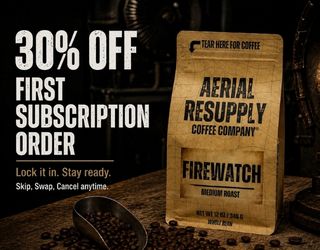
One vendor passed all five criteria. Small. Veteran-owned in the actual sense — one founder, one SDVOSB certification, verifiable. The coffee is named after equipment, operations, and aircraft. It does not have notes. It has a job. He ran it for two weeks before including it in this report. No complaints from the formation. Readiness maintained.
The vendor is Aerial Resupply Coffee. The code is HAMMER20. Twenty percent off. He is not in the business of endorsements. He is in the business of solving logistics failures, and this is one of them.
The Hammer filed the report on a Tuesday morning at 0530. Black coffee. No notes. Operationally acceptable.
He would like to say he is surprised by the state of things. He is not surprised. He has seen what happens when standards are treated as optional. They become suggestions. Suggestions become preferences. Preferences become a chalkboard with the word “playful” on it.
Standards are not optional. That is the whole point of standards. Apparently this still needs to be explained.